Structural Loading
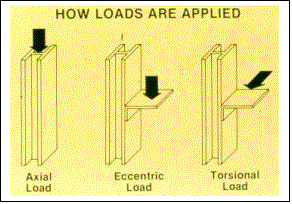
When structures are loaded, three different types of stress are created, these stresses occur separately or in combination. The stresses are:
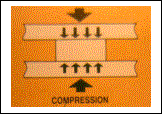
A. Compression
Compression stress crushes material together.
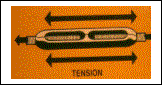
B. Tension
Tensile stress pulls material apart.
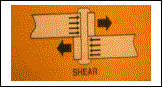
C. Shear
Shear stress causes material to fracture and slide across the fracture in opposite directions.
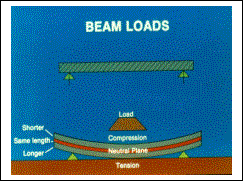
A wooden beam, supported on each end with a load placed mid-span, will deflect. This will result in the wood on the top of the beam compression stressed, and wood on the bottom of the beam tensile stressed. There will be a small amount of wood along the center of the beam from end to end that, in fact, is not experiencing any compressive or tensile stresses. This area is known as the neutral plane. Since the wood in this area is not carrying any of the load on the beam, but simply serves to keep the top (compressive stressed) part of the beam, and the bottom (tensile stressed) part of the beam separated the same distance along the entire length of the beam, less wood is needed along this neutral plane area. This is why trusses are more efficient at carrying loads than are solid structural elements. They have a top chord carrying the compression stress, a bottom chord carrying the tensile stress, and a web to keep the top and bottom chords separated the same distance along the entire length of the truss.